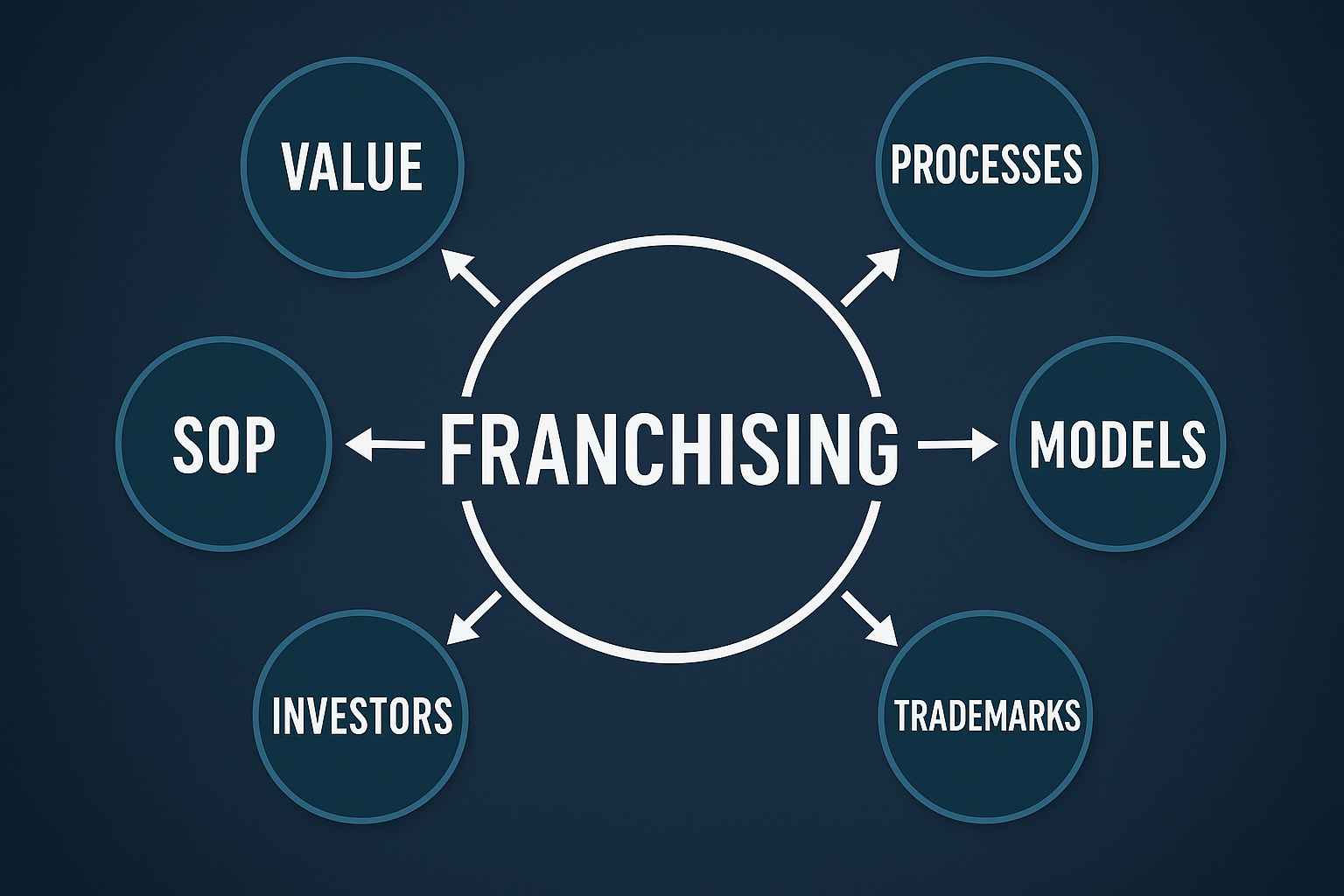
What Is a Franchise: And Should You Turn Your Business into One?
Franchising has shaped some of the most recognizable brands in the world. From McDonald’s to Anytime Fitness, the franchise model offers a compelling path for business expansion. But it’s not the right move for every business.
This guide breaks down the fundamentals: what franchising really is, how to know if your business is franchise-ready, how it can influence your business value, and why a professional business valuation is the first step in making the right decision.
What Makes a Business Franchise-Ready?
Most business owners start by asking the wrong question: Can I franchise my business? The better question is: Should I?
Franchising isn’t just about duplication. It’s about replicating value with consistency. Here are the key signs that a business is truly ready to franchise.
1. Proven and Profitable Business Model
Your business should already be profitable and show repeatable success. Franchisees won’t invest in a guess.
Key indicators:
- At least one (ideally more) profitable operating unit
- Documented customer demand
- Repeatable sales processes and predictable outcomes
Dreamrunner Insight: If your business depends on you showing up every day to keep it running, it’s not ready to franchise.
2. Documented Systems and Operations
Franchisees pay for a “business in a box.” To deliver that, you need:
- Standard operating procedures (SOPs)
- Training manuals and onboarding guides
- Defined brand guidelines and supplier lists
3. Strong Unit-Level Economics
A franchisee must pay royalty fees on top of normal business expenses. Your business model needs to remain profitable even after those costs.
Test your model:
- Will a new operator (with limited experience) still make money?
- Can your margins absorb royalties, marketing fees, and supply markups?
4. Trademark Protection and Brand Strength
Before franchising, protect your name and logo. Apply for federal trademark registration. A recognizable brand with legal protection is essential.
Strong brands:
- Own digital presence (domain, SEO visibility, consistent branding)
- Stand out in their niche (offer unique value or experience)
5. Resources and Capital to Support Franchisees
Franchising is not passive income. It’s a new business model — one that serves other business owners. You’ll need to provide training, support, legal compliance, and marketing infrastructure. On top of that, expect startup costs of $30,000+ just for legal and compliance.
How Franchising Impacts Business Value
A well-designed franchise system can dramatically increase your business valuation. But not always in the way most owners expect.
Franchising as a Value Multiplier
Buyers pay more for businesses that offer:
- Recurring revenue (royalties)
- Scalable systems that don’t depend on the owner
- Brand equity with national or regional recognition
Dreamrunner Insight: In a franchise system, you stop being the operator and start being the enabler. Your job is no longer running every location — it’s building the framework that allows others to run them successfully.
Higher Multiples for Intellectual Property
When a business owns trademarks, proven training systems, and unique processes, it commands a higher multiple on EBITDA. Investors love intellectual property. Franchising, done right, creates and amplifies this IP.
When Franchising Hurts Value
If you franchise too early, or with poor execution, it can damage your brand and reduce value. Unprofitable franchisees or poor systems can harm not just one location, but your entire brand.
Mitigating the Risk of Personal Goodwill
One of the challenges many small business owners face is that much of the company’s value is tied to them personally — their relationships, reputation, or skill set. This is called personal goodwill. Buyers discount businesses that depend too heavily on the owner, because once the owner leaves, much of that value disappears.
Franchising can help solve this problem. By transferring the owner’s knowledge, processes, and customer experience into documented systems, training programs, and brand standards, the value of the business begins to shift away from the individual and toward the brand itself. This makes the company more attractive to buyers and investors, and a valuation will show the positive impact of that transition.
Why a Business Valuation Matters Before Franchising
Franchising decisions should be grounded in facts, not just ambition. A professional business valuation provides the foundation for making that decision wisely.
Establishing a Baseline
Before you can know where you’re going, you need to know where you stand today. A valuation provides a clear, defensible picture of your company’s worth right now. This baseline allows you to measure the impact franchising could have on your business’s value over time. Without this starting point, you are flying blind.
A baseline valuation also acts as a benchmark for improvements. Business owners often discover areas of inefficiency, cost structures that can be optimized, or hidden strengths that make the company more attractive. Knowing these details before launching into franchising ensures you’re not scaling problems along with profits.
Supporting Financing and Expansion
Franchising almost always requires significant upfront capital. Whether you’re creating the legal documents, building training programs, or investing in marketing, the costs add up quickly. Banks and SBA lenders frequently require an independent valuation before approving loans tied to expansion. A valuation demonstrates that your business has the financial foundation to support borrowing and reassures lenders that your plan is credible.
For example, when applying for financing, lenders want to understand the value of your existing operations as collateral. They also want assurance that your projected growth is grounded in reality. A valuation helps secure financing on better terms by showing objective data rather than just projections.
Attracting Investors and Partners
Investors, potential franchisees, and strategic partners all want to know the same thing: is this business worth their time and money? A valuation provides credibility and transparency, giving confidence to outside stakeholders that your brand can support sustainable growth.
When a valuation is part of your pitch, it answers key investor concerns up front: what is the current fair market value, what are the revenue drivers, and how resilient is the model under different economic conditions? These details help transform interest into commitment.
Identifying Strengths and Weaknesses
Valuations dig deeper than surface-level financials. They highlight the strengths that can be leveraged in a franchise model and expose weaknesses that could undermine success. For example, a valuation might reveal:
- Heavy reliance on a single customer or supplier.
- Lack of documented processes that affect scalability.
- Strong cash flow potential that can support royalties.
Understanding these elements before franchising gives you time to strengthen weak spots and showcase your strongest attributes. It turns franchising from a leap of faith into a calculated move.
Benchmarking Progress Over Time
One often-overlooked reason for getting a valuation is the ability to track progress. As you consider franchising, your business is not static. A valuation conducted today provides a baseline, but repeating valuations annually or bi-annually lets you measure whether the business is becoming more franchise-ready over time. Benchmarking ensures you are improving key drivers like profitability, systems, and brand equity.
Risk Management and Compliance
Scaling through franchising introduces regulatory complexity. Franchise disclosure documents, tax compliance, and intellectual property protection all hinge on accurate financial data. A valuation ensures you have defensible documentation that can withstand scrutiny from regulators, courts, or even disputes with franchisees.
Legal conflicts, shareholder disagreements, or IRS audits are all easier to manage with an independent valuation in hand. It provides a shield that demonstrates fairness and compliance.
Succession and Exit Planning
Even if franchising is not the final step, it often coincides with long-term exit planning. A valuation helps you understand how franchising impacts the eventual sale or transfer of your business. Will franchising increase your multiple at exit, or could it introduce risks that lower it? Having this clarity ensures your franchising decision aligns with your personal financial goals.
Strategic Decision-Making
Finally, a valuation puts franchising into context with other growth strategies. Expanding through company-owned locations, merging with another firm, or selling outright are all alternatives. Only by knowing your current value and projected value under different strategies can you confidently decide whether franchising is the best route.
The Risks of Skipping a Valuation
Some business owners rush into franchising without obtaining a valuation. This is one of the costliest mistakes you can make. Without a valuation:
- You may overprice your franchise opportunity, scaring away potential franchisees.
- You may underprice your opportunity, leaving money on the table and undervaluing your brand.
- You risk scaling operational weaknesses that will multiply across every franchise unit.
- You lose credibility with lenders, investors, and prospective franchisees.
- You expose yourself to legal and compliance risks without defensible numbers.
- You reduce trust in your brand because stakeholders will question whether your numbers are reliable.
- You risk wasting years of effort and capital if expansion stalls due to misaligned expectations.
Skipping a valuation means gambling with your future. Instead of building confidence and clarity, you create uncertainty — and uncertainty kills deals.
Dreamrunner Insight: A business valuation gives you the roadmap you need to decide whether franchising is the right path forward. Contact Dreamrunner to obtain your valuation and see what path your business is on.
So, Should You Franchise?
If your business has repeatable success, strong systems, and room to scale, franchising could be a powerful next move. But the first step is clear: you need to know what your business is worth today.
Ask yourself:
- Is my business replicable without me?
- Can someone new follow my systems and succeed?
- Am I ready to support franchisees the way I support customers?
Final Thoughts and Next Steps
Franchising is not a shortcut — it’s a strategic reinvention of your business. Done right, it can multiply your brand, boost valuation, and create a scalable legacy.
At Dreamrunner Consulting, we provide independent, professional business valuations that show you exactly where you stand. A valuation is more than just a number — it’s the foundation of every future strategy. Whether you choose to franchise, sell, expand, or prepare for succession, your valuation tells you what’s possible and what to watch out for.
We’ve seen firsthand how powerful this can be. For example, we worked with a small soda shop chain that had eight locations but no scalable model. After assessing their cost structure, risks, and revenue drivers, we helped streamline operations into a repeatable system. The results? The company more than doubled its store count and later attracted private equity investment. Today, they’re expanding nationally, with more than 250 franchises in the works.
Stories like this show the power of combining business valuations with actionable strategy.
👉 Want to see the full Soda Shop case study? Contact us today, and we will send it directly to your inbox.
👉 Contact Dreamrunner about a business valuation today to see if franchising makes sense for your future.
About the Author: