For many business owners, growth feels like the clearest signal that a company is becoming more valuable. Revenue increases, new customers appear, the team expands, and the business begins to feel like it has real momentum. From the owner’s perspective, it seems logical that a growing business must also be a more valuable business.
Growth is visible. It can be measured. It often reflects years of persistence, long hours, and strategic decisions made under uncertainty. For entrepreneurs who have built their companies from the ground up, growth is frequently the most satisfying proof that the market values what they have created.
But when a business enters a real transaction environment, whether through a sale, recapitalization, partner buyout, or investor discussion, the conversation around value changes quickly. Buyers do not evaluate companies the same way owners do. Instead of focusing primarily on growth, they focus on risk and the sustainability of earnings after the transaction closes.
They want to understand whether the earnings they see today will continue under new ownership. They evaluate how stable the company’s revenue is, how dependent the business is on specific individuals or customers, and how easily the organization can operate without the founder at the center of every major decision.
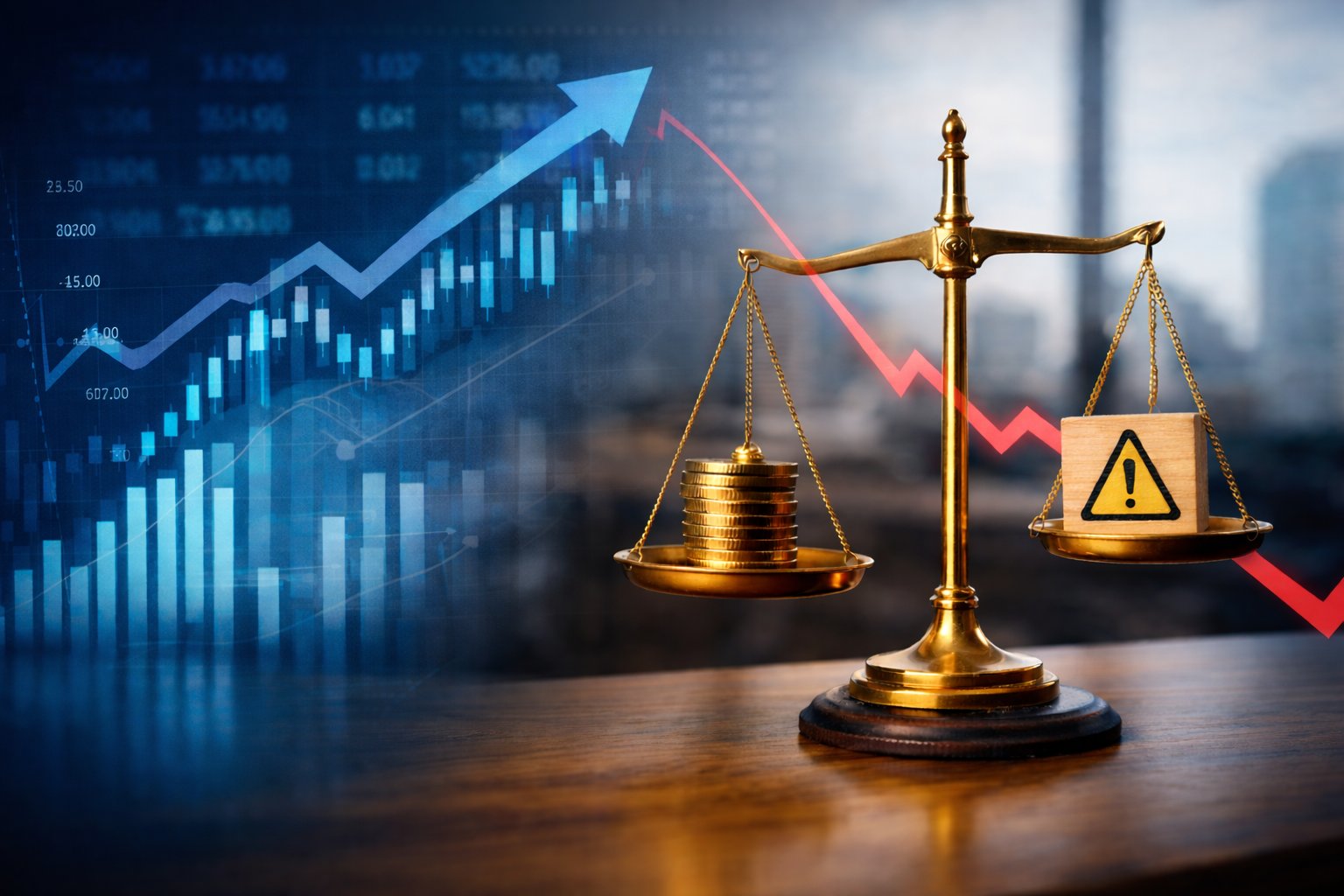
Growth may attract buyer attention, but risk determines the price buyers are willing to pay.
Two businesses can have nearly identical revenue and EBITDA. Both companies may even be growing at similar rates. Yet when those businesses enter the market, one may receive multiple offers and premium valuations while the other struggles to secure attractive deal terms. The difference almost always comes down to buyer confidence.
If buyers believe the company’s earnings are predictable and sustainable, they become comfortable paying more. If uncertainty appears, buyers begin adjusting the valuation to protect themselves from potential downside.
Understanding how buyers evaluate risk is one of the most important things a business owner can learn when preparing for a valuation.
Why Buyers Evaluate Risk Before Growth
Entrepreneurs naturally evaluate their businesses through the lens of effort and achievement. Owners remember the early years of uncertainty, the first customers who took a chance on the company, and the countless operational problems that had to be solved along the way. Growth becomes the reward for those years of work and often serves as the most visible indicator of success.
Buyers approach valuation from a completely different perspective. They are not purchasing the history of the company. They are purchasing the future stream of earnings the business will generate after the acquisition. Because of this, buyers spend far more time evaluating risk than evaluating growth.
They want to understand how the business will perform if circumstances change. What happens if the founder steps away from daily operations? What happens if a major customer reduces its purchasing volume? What happens if the market becomes more competitive?
If the company appears resilient under those scenarios, buyers gain confidence. If uncertainty appears, buyers compensate by lowering the purchase price or structuring the deal in ways that reduce their exposure.
Buyers are also evaluating risk through the lens of capital allocation. They want to understand whether earnings will require ongoing reinvestment just to sustain performance, or whether those earnings can be distributed or redeployed efficiently. A company that requires constant reinvestment to maintain its position is inherently riskier than one that produces stable cash flow with minimal ongoing capital requirements.
This is particularly important in lower middle market businesses, where operational inefficiencies or underinvestment can distort performance. Buyers often adjust for future capital expenditures, working capital needs, or operational improvements that will be required after closing. Even if historical earnings appear strong, these forward-looking considerations directly influence valuation.
In this sense, buyers are not simply evaluating whether earnings exist. They are evaluating the durability, quality, and usability of those earnings in a post-transaction environment.
This is why two businesses with similar financial performance can receive dramatically different offers. One appears predictable. The other appears uncertain. In acquisition markets, predictability is extremely valuable.
Dreamrunner Insight: Growth may attract buyer interest, but predictable earnings drive premium valuations. Businesses that demonstrate stability under new ownership consistently command stronger multiples.
Where Growth Can Hide Risk
Rapid growth can sometimes conceal structural weaknesses inside a company. When revenue expands quickly, operational inefficiencies may not immediately appear because increasing sales can temporarily compensate for internal challenges or systems that have not yet matured.
During diligence, buyers examine the business in much greater detail. One of the most common risks they identify is customer concentration. A company may appear highly successful because one large client represents a significant portion of revenue. From the owner’s perspective, this relationship may feel secure and long-standing. From the buyer’s perspective, it represents exposure.
If a single customer accounts for a large percentage of revenue, the loss of that client could significantly affect the company’s earnings.
Operational dependence can create similar concerns. Many founder-led businesses grow around the expertise, judgment, and relationships of the owner. While that leadership often drives early success, buyers want to know whether the company can continue operating effectively without the founder making every decision.
When growth depends heavily on individuals rather than systems, buyers perceive higher risk. This does not mean the business lacks value. It means buyers must account for the uncertainty associated with ownership transition.
Another area where growth can obscure risk is pricing discipline and margin stability. In some businesses, revenue growth is achieved by aggressively pursuing sales without maintaining consistent pricing standards. While this can increase top-line performance in the short term, it may introduce long-term risk if margins are not sustainable.
Buyers evaluate whether growth has been achieved through repeatable processes or opportunistic decisions that may not hold under different market conditions. If pricing varies significantly across customers, or if margins depend heavily on specific relationships or one-time opportunities, earnings may be viewed as less reliable.
Rapid growth can also strain internal systems. Businesses that scale quickly without strengthening accounting processes, reporting structures, or operational controls often create gaps that become visible during diligence. These gaps introduce friction and reduce buyer confidence.
Growth supported by strong systems increases value. Growth that outpaces infrastructure increases perceived risk.
Understand Your Value Before Buyers Do
Most business owners don’t see how buyers will evaluate their company until they are already in a negotiation. By that point, leverage has often shifted, and risks identified during diligence begin to influence both price and deal structure.
A professional valuation conducted in advance allows you to see your business through the same lens buyers will use. It helps identify risk factors early, strengthen key areas of the business, and position your company more effectively before entering the market.
CONTACT Dreamrunner Consulting, request a valuation QUOTE, or schedule a CALL to understand how your business would be evaluated in a real transaction environment.
Earnings Quality and Financial Transparency
One of the first areas buyers examine during diligence is the quality of the company’s earnings. Most valuation discussions begin with EBITDA, but experienced buyers rarely accept that figure without deeper analysis. Instead, they conduct what is commonly known as a Quality of Earnings review to evaluate whether reported earnings reflect true operating performance.
Privately owned companies often include discretionary expenses or owner-related costs within their financial statements. These may include personal travel, family payroll, vehicles used by ownership, or other discretionary spending. While these items can often be normalized during valuation, buyers need clear documentation to understand the company’s real profitability.
Buyers also evaluate whether profitability has been temporarily increased by postponing necessary investments. Deferred hiring, delayed equipment purchases, or reduced marketing budgets can inflate margins in the short term. If buyers believe those investments will soon be required, they adjust valuation expectations accordingly.
Transparent financial reporting significantly reduces uncertainty in this process. When buyers trust the numbers, negotiations move more efficiently and valuations tend to improve.
Another important consideration is consistency over time. Buyers look for patterns in financial performance that indicate stability rather than volatility. Significant fluctuations in revenue or margins without clear explanations can raise concerns about predictability.
When variability exists, buyers expect to understand the underlying drivers. Whether tied to seasonality, project-based work, or market cycles, clear explanations reduce uncertainty and strengthen confidence.
Dreamrunner Insight: Financial transparency is not just good accounting. It is a valuation strategy.
Revenue Durability and Customer Stability
Another major factor influencing enterprise value is revenue durability. Revenue durability refers to how predictable the company’s income streams appear over time. Buyers want to know whether the revenue they see today is likely to continue tomorrow.
Businesses with recurring contracts, subscription models, or long-term service agreements often receive stronger valuations because buyers can forecast future performance with greater confidence. Even when formal contracts are not present, consistent repeat purchasing behavior can provide similar reassurance.
Revenue durability is also influenced by the nature of customer relationships. Businesses that are embedded in their customers’ operations or provide specialized services often benefit from stronger retention and higher switching costs. These dynamics make revenue more stable.
Customer diversification also plays a significant role. When revenue is distributed across many clients, the loss of any single customer has a limited impact on the overall business. This reduces perceived risk and increases buyer confidence.
Revenue durability is not simply about how much the company sells today. It is about how reliably those sales can continue.
Transferability and Leadership Depth
Transferability is one of the most powerful drivers of enterprise value. Buyers are not purchasing the founder personally. They are purchasing the organization that will remain after ownership changes.
If the company relies heavily on the founder’s relationships, decision-making, or industry knowledge, buyers may worry that performance could decline once the founder exits the business. This concern is extremely common in founder-led companies.
Businesses become significantly more valuable when leadership responsibilities are distributed across a capable management team. When key employees manage customer relationships, oversee operations, and participate in strategic decision-making, the company becomes less dependent on a single individual.
Transferability also extends beyond leadership into operational knowledge. Buyers want to see that key processes, pricing decisions, and workflows are documented and repeatable. When knowledge is institutionalized rather than informal, the business becomes easier to operate and scale.
Reducing reliance on the founder is a critical step in improving valuation.
Dreamrunner Insight: Founder-driven companies can generate strong income, but investor-ready businesses operate through systems.
How Valuation Multiples Reflect Risk
Valuation multiples represent the market’s perception of risk. When buyers believe earnings are stable and transferable, they are willing to pay higher multiples. When uncertainty appears, multiples decline.
This explains why similar businesses can receive very different valuations. The market is not pricing current performance. It is pricing the probability that performance will continue.
Case Study 1
Background
A regional services company had grown steadily over the previous decade. Revenue increased each year, margins remained strong, and the company developed a reputation for reliability within its market. From the owner’s perspective, the business was performing at a high level and appeared well-positioned for a successful sale.
However, a closer look revealed that approximately forty percent of total revenue came from a single customer. The relationship had existed for years, and the owner viewed it as stable and secure. From a buyer’s perspective, this level of concentration represented a meaningful risk.
The Deal
When the company entered the market, interest was strong. Multiple buyers recognized the company’s performance and industry position. However, during diligence, nearly every buyer focused on the same issue: customer concentration.
Several offers included earnout provisions tied specifically to the retention of that largest customer. Buyers were willing to move forward, but they were not willing to fully underwrite the risk upfront.
Outcome
Rather than accept those terms, the owner chose to delay the sale and focus on diversifying the customer base. Over time, the company expanded its client mix and reduced reliance on the largest customer to below twenty percent of total revenue.
When the company returned to market, buyers evaluated it differently. Revenue appeared more stable, risk was reduced, and the business ultimately received stronger offers with fewer contingencies.
Lesson Learned
Customer concentration does not prevent a transaction, but reducing it can significantly improve both valuation and deal structure.
Case Study 2
Background
A technology-enabled services company experienced rapid growth over several years. The founder remained deeply involved in pricing decisions, contract negotiations, and key customer relationships. While the business was performing well financially, much of its success was tied directly to the founder’s involvement.
The Deal
Buyers recognized the company’s growth and profitability, but they also identified founder dependence as a risk. Several proposed deal structures required extended transition periods and earnouts tied to the founder remaining actively involved in the business after closing.
Outcome
Instead of proceeding immediately, the founder spent time building leadership depth. Responsibilities were delegated, internal systems were strengthened, and customer relationships were transitioned to other members of the management team.
When the company returned to market, buyers viewed it as a more transferable and scalable business. As a result, it received stronger offers and more favorable deal terms.
Lesson Learned
Reducing founder dependence increases transferability and supports higher valuation outcomes.
Preparing a Business for Maximum Value
Owners who want to maximize enterprise value should begin preparing long before they plan to sell. Many of the factors that influence valuation take time to improve, and addressing them early allows owners to strengthen their businesses before entering the market.
Key areas to focus on include:
-
- Improving financial transparency
- Diversifying the customer base
- Developing leadership depth
- Documenting operational systems
These improvements are interconnected. Strengthening one area often supports improvements in others. Businesses that take a structured approach to reducing risk present a more cohesive and credible story to buyers.
Preparing for a valuation is not simply about increasing revenue. It is about reducing uncertainty.
The Bottom Line on Enterprise Value
A business becomes truly valuable when it offers more than profitability. It offers predictable, transferable earnings supported by strong systems, diversified customers, and capable leadership.
Owners who understand how buyers evaluate risk gain a meaningful advantage. Instead of reacting during diligence, they can proactively strengthen the factors that influence valuation.
Ultimately, business value is not determined only by how quickly a company grows. It is determined by how confidently buyers believe that growth can continue.
About the Author:

Talon C. Stringham
Owner/President
Talon C. Stringham has over 20 years of professional...
Talon C. Stringham has over 20 years of professional experience including providing litigation support services, expert witness...